Fra Aumgn
ON THE WORK IN BLACK –
BLACKNESS “CROSSING THE ABYSS”
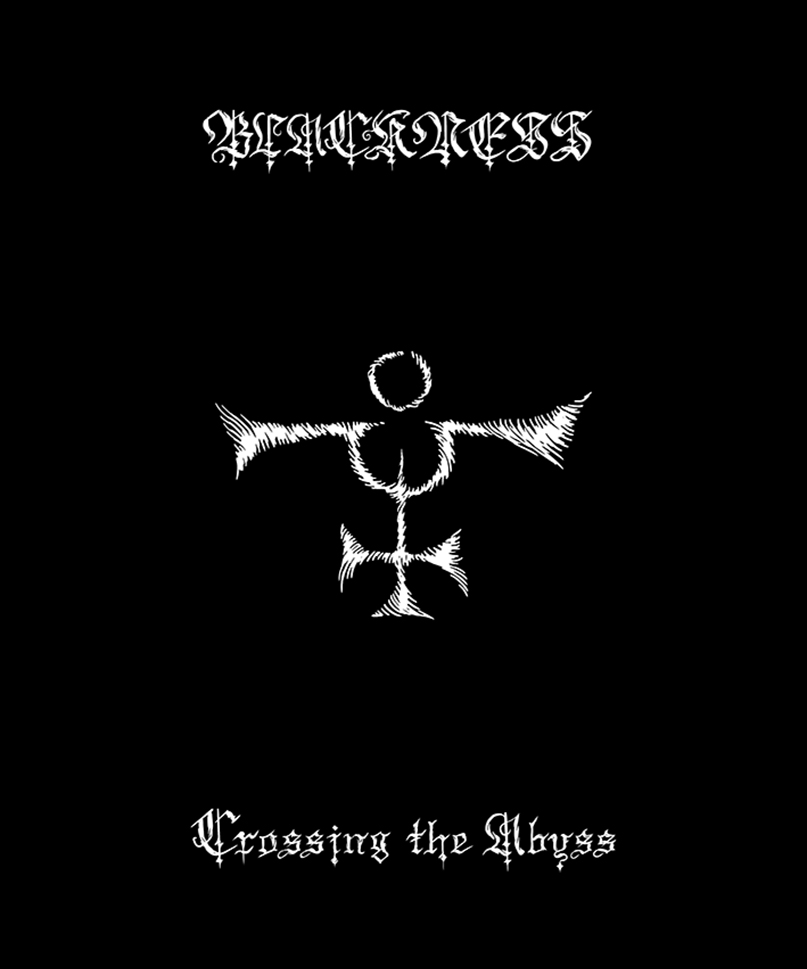
It has come to pass: under the banners of Darker than Black (Germany), Final Agony (USA), and Poisonous Sorcery (Spain), the black metal album Blackness – Crossing the Abyss has been released in various formats. Conceptually this opus expresses a system of initiation, and therefore understanding it is itself an art. To pass through it, one requires keys that must be conveyed.
This work is grounded in the Western occult tradition, whose fundamental principle is the identity of the microcosm and the macrocosm. Between them lies the Abyss, revealed by the interval between death and life within the natural cycle. In culture this interval is reenacted through initiation, which stages death in a former condition and birth into a new one.
The central theme of this work is the Crossing of the Abyss—an initiation of initiations that effects a radical transformation of one’s inner essence and demands the permanent renunciation of all that a human possesses and all that a human is.
In Hermetic alchemy this operation is known as Nigredo—Blackness—the stage of dissolution, purification, and transformation. On the individual level it corresponds to agony, wherein an ontological drama unfolds: from LVX to NOX. It engenders profound inner changes: time passes into eternity, physics into metaphysics, fear disappears, blindness gives way to vision, and symbols acquire meaning.
Blackness – Crossing the Abyss objectifies this mystery within an artifact that unites music, literature, and visual art. Its conceptual key is an original symbol of the Crossing of the Abyss, representing the union of the alchemical signs Spiritus and Calx.
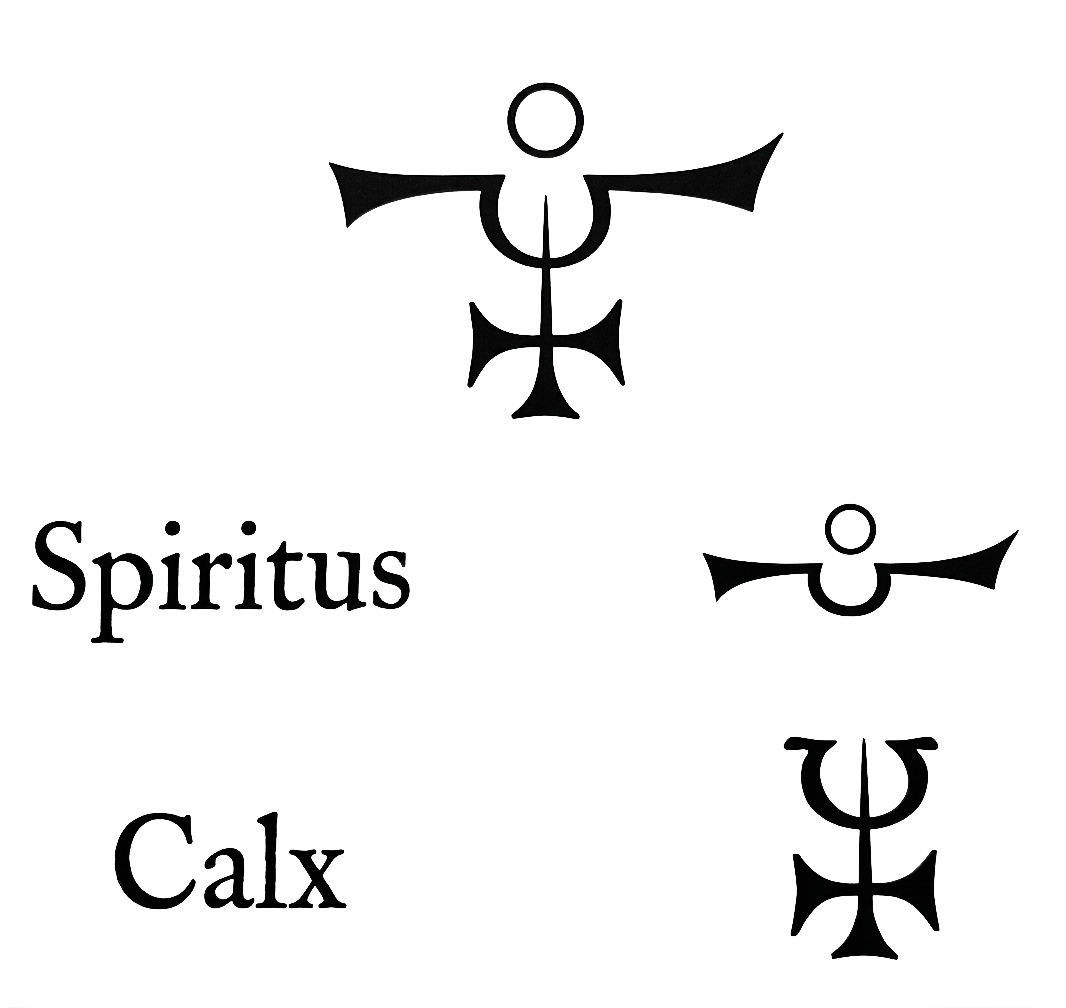
Spiritus (distilled spirit) signifies the manifestation of Spirit through ascending and descending processes generated by the heating and sublimation of wine—the blood of life. Calx (calcium), a primary constituent of bone, combines a tendency toward descent with an orientation toward eternity. Their union—the calcination of spirit—is the reaction accompanying the Crossing of the Abyss.
The nature of this process is revealed through compositions based on alchemical themes: purification within the earth (Vitriol), separation of spirit from flesh (Alembic), the triumph of spirit (Ithyphallus), acceptance of death (Nigredo), transition into eternity (Albedo), annihilation of ontology (Crossing the Abyss), and the Great Rest (Otium Magnum).
The leitmotif of the work—the metamorphoses of the Great Work—is present not only in the lyrics but also in the artwork, executed in the style of Masonic tracing boards. Such boards depict grades of initiation and are used for concentration, through which symbolic initiation may be realized.
This hints that the artifact is intended not merely for aesthetic enjoyment but also for metaphysical practice capable of producing inner transformation through reflection, trance, and gnosis. To attain such an effect it is important to grasp the philosophy underlying its Hermetic, alchemical, and qabalistic symbolism.
VITRIOL
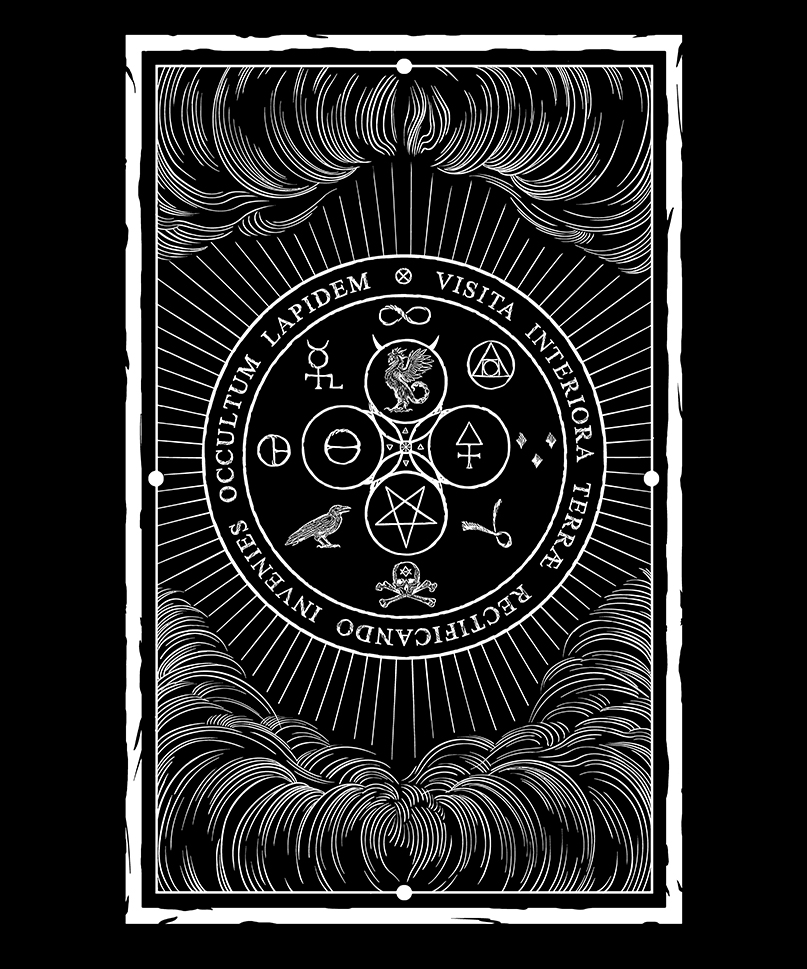
The formula VITRIOL signifies a descent into the interior of the Earth in search of the Philosopher’s Stone—the Occultus Lapis. It is represented by the Pentacle of the Macrocosm, at whose center stands the Wheel of Spirit and at whose sides appears the Cross of the Elements.
Their interaction is depicted through circles containing, on the horizontal axis, the symbols of Sulfur and Salt, and on the vertical axis, the deadly Prima Materia in the form of the Basilisk and the falling Star of the Microcosm—liquid Mercury.
Surrounding them are alchemical emblems expressing the mystery of Spirit within Matter: infinity, the Work, rupture, transfiguration, death, sorrow, wrath, and the limit of ontology—Mercurius Saturni.
ALEMBIC
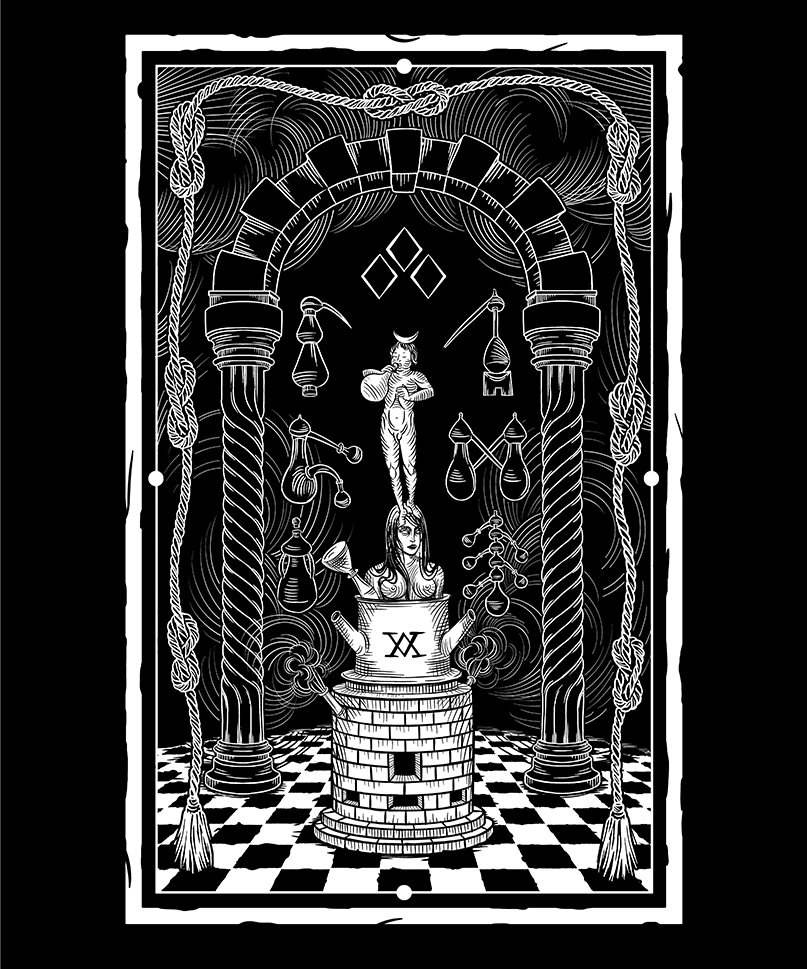
Alembic symbolizes the technology of sublimation and distillation, discovered experimentally by alchemists and refined over millennia. It enables the extraction of Anima and Spiritus through the heating of Corpus and thus represents the art of initiatic transformation.
Understanding the processes occurring within the alembic serves as an introduction to the philosophy of Nature and Spirit. Sublimation is a metaphor for the conversion of matter into spirit, purification, and the transformation of the adept into a combustible and volatile agent. Distillation—or the descent of drops—represents the transition of that agent from a volatile into a fluid state through cooling.
ITHYPHALLUS
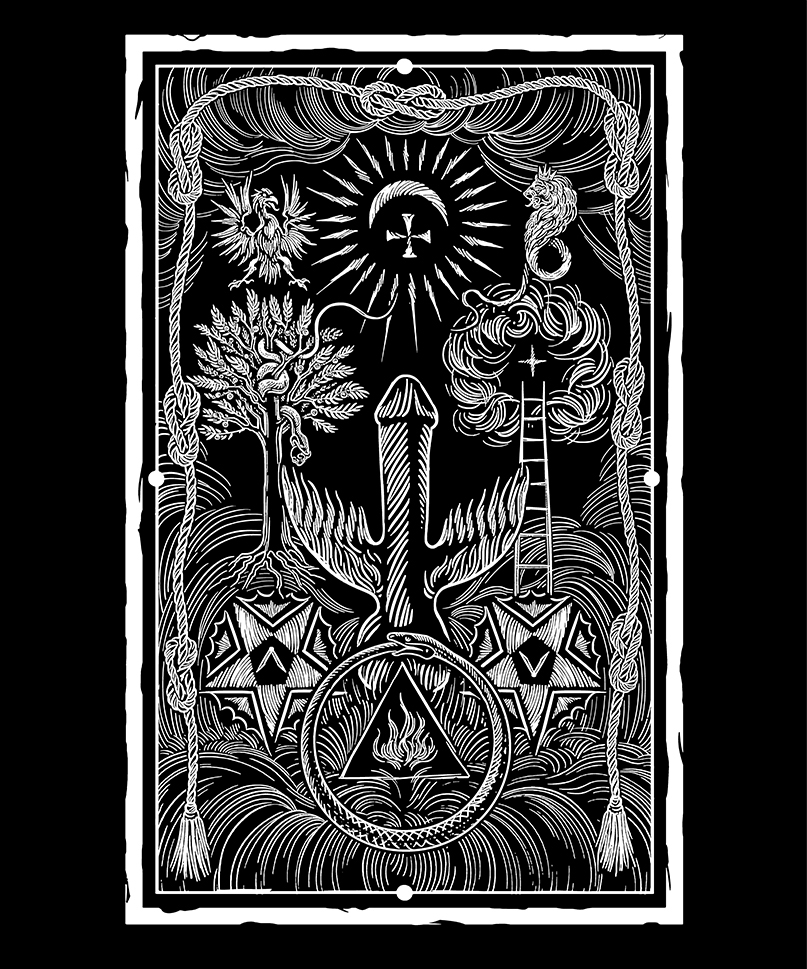
Ithyphallus affirms the Hermetic identity of the Phallus of the Microcosm and the Sun of the Macrocosm. This doctrine was outlined by Aleister Crowley in a secret instruction that serves as the key to the illustration:
“The Fire; an image of Sol, and a fable of the Phallus.
The Moon; an image of Kteis, only worshipped with Sol in his aspect as an extension of the Phallus.
The Mountain; reverenced as the home of the Gods, the visible place of the rising of Sol, and as by shape symbolical of the Phallus. Some mountains are female, from shape or tradition.
The Ancestor; revered as an incarnation of the Phallus.
The Yoni or Kteis; revered as the House of the Phallus, and his complement.
The Snake; revered as giver of Death, and as a symbol of the Spermatozoon. He has often the head of
The Lion; to indicate the mighty power of the Spermatozoon.
The Egg; revered as Solar, and in itself as the vehicle of Phallic energy.
The Eagle; and many other winged creatures; also wings attached to the symbols. This represents the flight of Life from one resting-place to another, and is therefore a proper attribute of the Phallus.
The Tree; is but the flowering Phallus.”
NIGREDO
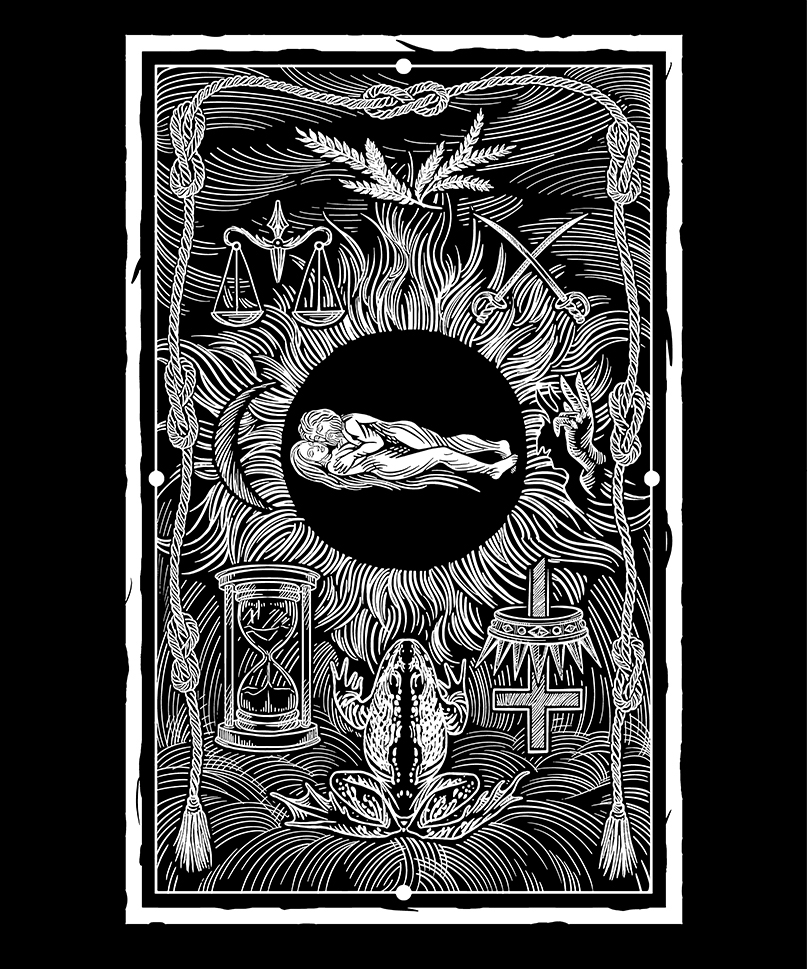
Nigredo illustrates the transformation in which the process of dissolution reaches its culmination and passes into a process of becoming, whereby death proves to be the source of life.
This change is expressed through the sexual act, wherein equilibrium is achieved between swords and scales—active and passive natures. Its defining characteristic is cyclicity and mutability, symbolized in different aspects by the Moon and the Sign of the Devil, the crowned cross, and the hourglass.
The toad—a symbol of impurity—points to the fleetingness of the moment after which all things turn to decay. Above appears a branch of acacia, marking the burial place of the Master.
ALBEDO
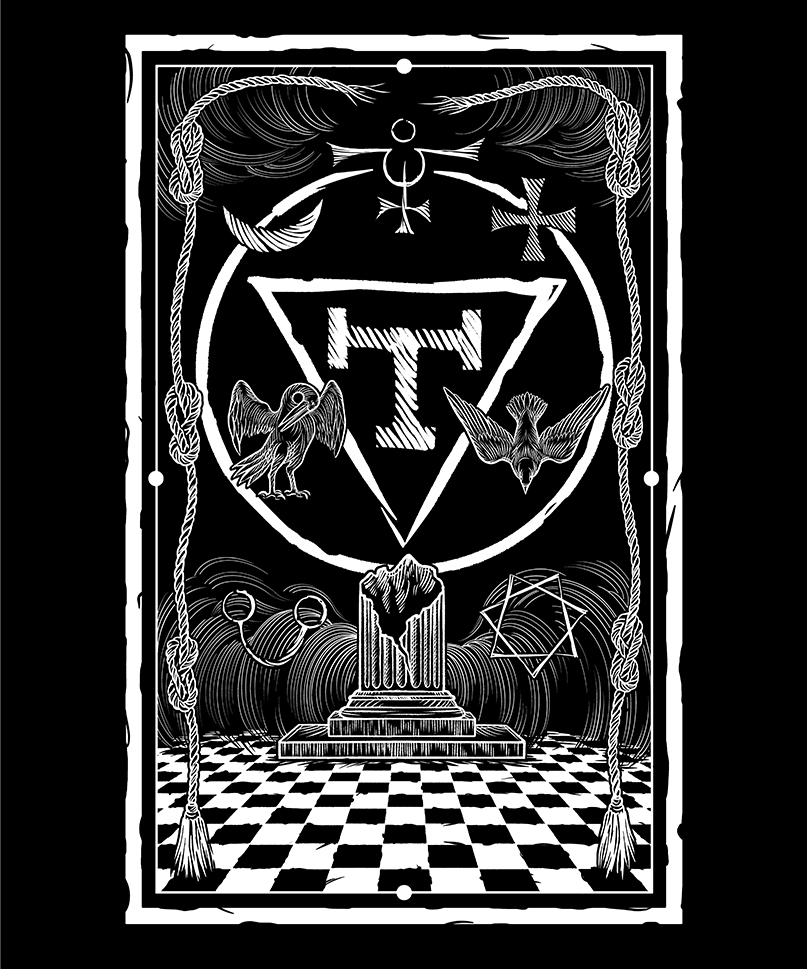
Albedo illustrates the Masonic symbol of the Royal Arch with the Triple Tau, traditionally associated with passage through death.
It is inverted because it represents an illusory transition and a form of self-deception practiced by those who seek immortality and fear rupture. The symbols of the calcination of spirit above, flanked by a cross and crescent moon, indicate separation and the necessity of accepting destiny.
The dove directed toward the septagram symbolizes the descent of Spirit upon Earth. The pelican and the sign of purification beneath it signify the highest form of redemption through nourishing others with one’s own blood.
The broken column is a sign of former greatness, while the black-and-white foundation symbolizes the play of opposites upon which all things rest.
CROSSING THE ABYSS
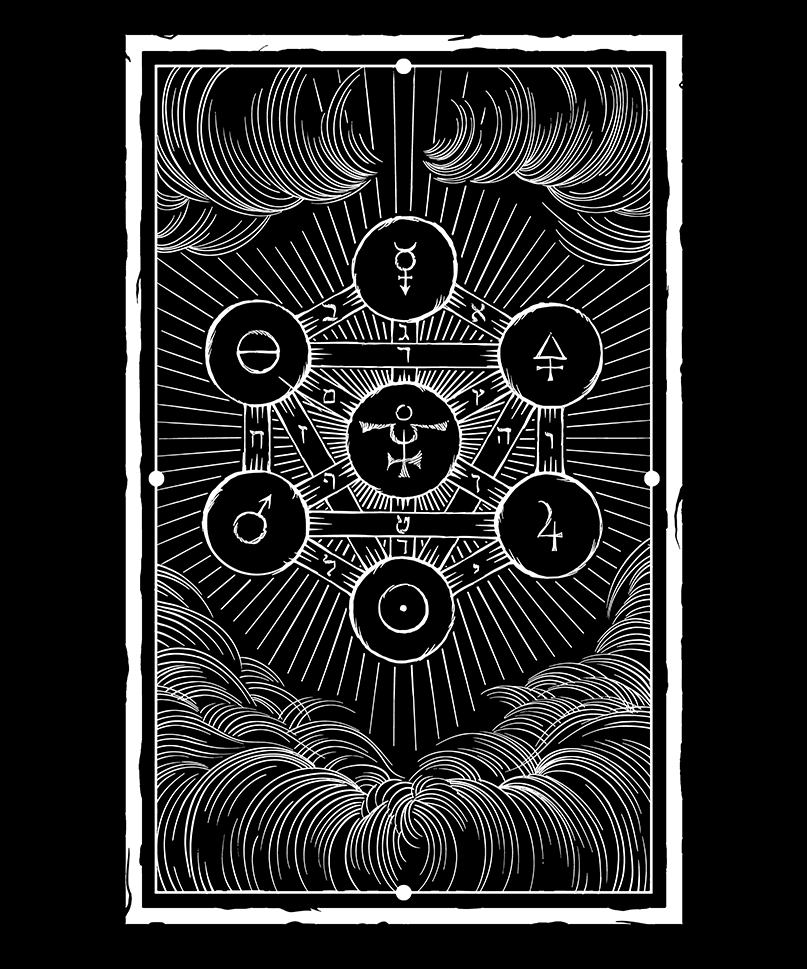
The illustration Crossing the Abyss presents an initiatic result obtained through visionary work with transmissions: a qabalistic diagram of Daath together with its adjoining paths and sephiroth.
It contains keys that allow the Abyss to be crossed in numerous different ways, significantly expanding the horizon of traditional conceptions of this mystery. The lyrics of the composition broadly unveil the ritual that introduces the initiate into this realm.
This is fundamentally new knowledge, the conditions for whose emergence have been developing within the Western occult tradition since the Renaissance. From this diagram was derived the Daath Tarot, whose theory is presented in detail in the work of the same name:
https://basileus-oto.org/daath-tarot.pdf
OTIUM MAGNUM
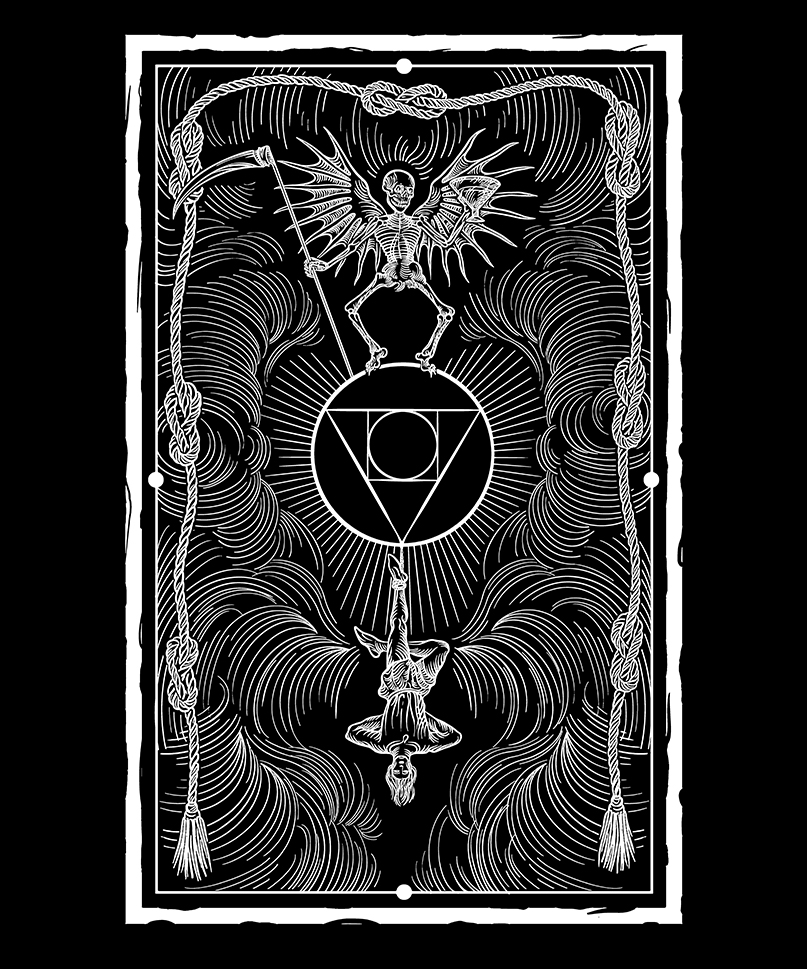
Otium Magnum is the concept of the Great Rest, expressed through the inverted symbol of the Great Work—the alchemist’s final illusion.
Above it stands a skeleton with a scythe, holding a chalice at the Feast in the Name of Death. Beneath it hangs an adept suspended upside down. This is a special initiatic figure whose contours form the royal sign of Jupiter within the womb of the Great Mother—Binah.
Those who have crossed the Abyss may find themselves in such a position.
© Fra Aumgn, Basileus O.T.O., 2026